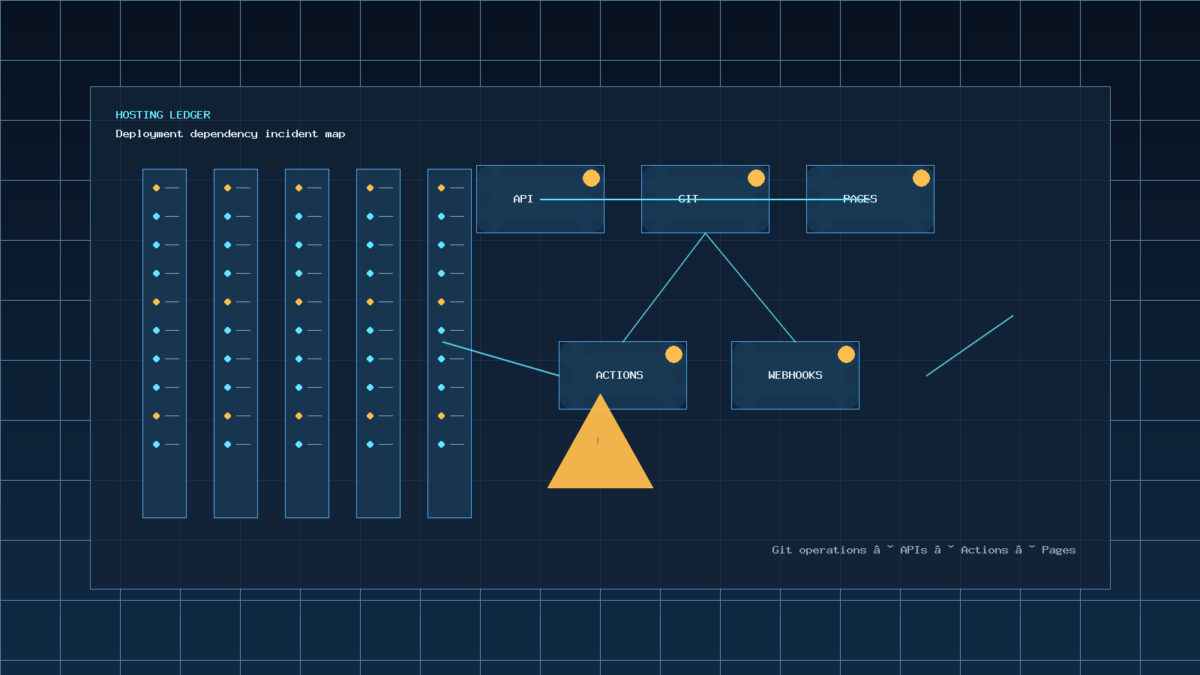
GitHub spent part of August 17 fighting a broad service degradation that hit the plumbing many hosting and web teams use to ship sites: repository downloads, Git operations, API requests, Actions, Pages, pull requests, Issues and webhooks.
The company’s official status incident says the disruption began with “impacted performance for some GitHub services” at 13:40 UTC. GitHub later said the degradation affecting API Requests, Actions, Git Operations, Issues, Pages, Pull Requests and Webhooks had been mitigated at 16:59 UTC, then continued working through residual authentication failures and API availability problems before marking the incident resolved at 21:15 UTC.
For hosting operators, the affected component list matters more than the brand name. GitHub is often the source of truth for static-site builds, WordPress plugin deployments, infrastructure-as-code changes, container builds and emergency rollbacks. When Git Operations or repository downloads fail, a deploy can stall before it reaches the host. When Actions, webhooks or API requests are degraded, automated release paths and status checks can silently drift from “hands off” to “needs an operator.”
The Register reported during the incident that GitHub’s status page showed a 50% error rate on repository content downloads and degraded Copilot availability. GitHub’s own updates later broadened the visible impact to the core services used by site teams to review, build and deploy code.
The practical takeaway is familiar but worth repeating after a second GitHub disruption this month: deployment dependencies need their own runbook. Hosts and agencies should keep a tested manual deploy path, cache build artifacts where possible, avoid making rollback depend on the same third-party service that failed, and make CI/CD health visible in customer-facing incident checks. “The site is up” is no longer the only hosting availability question; “can we safely change it right now?” is part of the same reliability contract.
Sources: GitHub Status; The Register.